How to Use でも (demo) – “But” in Japanese
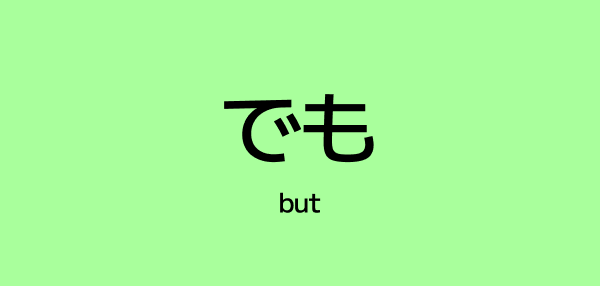
Want to say “but” in Japanese? The simple answer is でも (demo).
It’s a go-to word for contrasting two ideas — kind of like saying “but,” “however,” or “still” in English.
In this guide, you’ll learn:
- Whatでもmeans and when to use it
- Real-life examples you can copy
- Howでもcompares to other words likeが(ga) andけど(kedo)
- Common patterns and beginner mistakes
Let’s break it down 👇
What DoesでもMean?
でも means “but,” “however,” or “still” — and is used to introduce a contrast or something unexpected.
It usually comes at the beginning of the second sentence.
Example 1: Basic contrast
にく は すきです。でも、さかなはあまりたべません。 Niku wa suki desu. Demo, sakana wa amari tabemasen. I like meat. But, I don’t really eat fish.
Example 2: Something unexpected
かれ は 猫 好き です。でも、猫アレルギーです。 Kare wa neko zuki desu. Demo, neko arerugii desu. He's a cat lover. But, he's allergic to cats.
Example 3: Changing your mind
ラーメン を たべようかな。でも、ピザもいいな。 Raamen wo tabeyou kana. Demo, piza mo ii na. Maybe I’ll get ramen… But, pizza sounds good too.
How to Useでも
- Use でもat the start of the second sentence.
- It’s casual to neutral — works well in most situations.
- Use a period or pause between your first and second sentence.
✅ Correct:
あつい です。でも、がいしゅつします。 It’s hot. But, I’ll go out anyway.
❌ Incorrect:
あついですでも、がいしゅつします。← Don’t useでもmid-sentence like a particle.
でもvsがvsけど– What’s the Difference?
All three mean “but,” but they're a bit different. (So many buts!)
1. でも
- Neutral tone
- Separate sentence
びょうき です。でも、がっこう に いきます。 I’m sick. But I’m going to school.
でも、びょういん に いった ほう が いいですよ… But you should go to a doctor...
2. が
- More formal
- Used mid-sentence
びょうき ですが、がっこうにいきます。 I’m sick, but I’m going to school.
3. けど / けれど
- Casual or softening tone
- Used mid-sentence
びょうきだけど、がっこうにいく。 I’m sick, but I’ll go.
Pro Tip: Start with でも as your default “but.”
Once you’re comfortable, play around withがandけどfor variety.
Try it Yourself
Fill in the blank withでも:
ねこはかわいい。_____、いぬもすき。 →でも
おかしがすき。_____、ダイエットちゅう。 →でも
にほんごはむずかしい。_____、おもしろい。 →でも
(Too easy? We agree...)
Key Takeaways
- でも = “but” or “however”
- Used at the start of the second sentence
- Great for beginners — neutral and versatile
- Compare with が (formal) and けど (casual) to grow your range
Hope this guide has helped get your "but"s in order!
Finished? Save this to your collection