Learn Japanese Hiragana: The Complete Beginner’s Guide
If you’re starting your Japanese journey, learning Hiragana (ひらがな) is your most important first step. It’s the foundation for reading, writing, and speaking Japanese, much like learning the ABCs in English. Once you master it, everything else (Katakana, Kanji, grammar, and vocabulary) becomes much easier.
In this guide, we’ll cover everything you need to know—from what hiragana is, how to read it, and the best tips to learn fast.
What is Hiragana?
Hiragana (ひらがな) is one of the three Japanese writing systems, along with Katakana (カタカナ) and Kanji (漢字). It is a phonetic syllabary, meaning each character represents a distinct sound, not an idea. Hiragana is mainly used for:
- Native Japanese words that don’t have kanji
- Grammar particles (like は, を, に)
- Verb and adjective endings
- Furigana, small hiragana written above kanji to show pronunciation

How Many Hiragana Are There?
There are 46 basic hiragana characters in modern Japanese. These characters represent all the fundamental sounds in the Japanese language. But that’s not all—there are also:
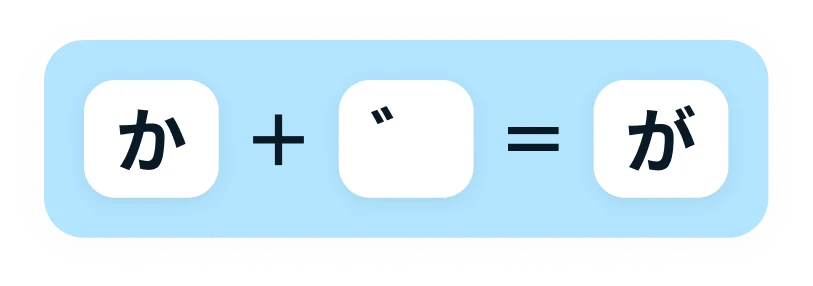
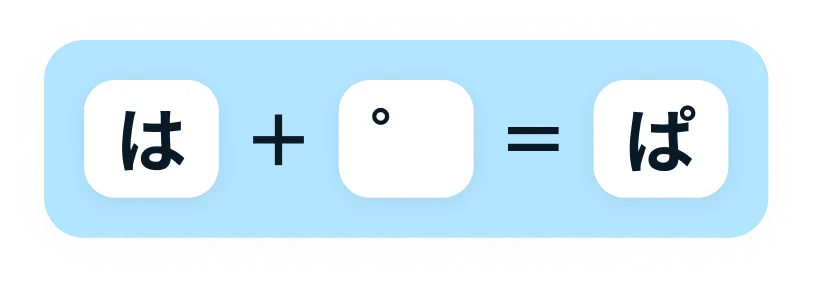
25 additional sounds made with diacritics called dakuten (゛) and handakuten (゜).
Examples: が (ga), ぱ (pa)
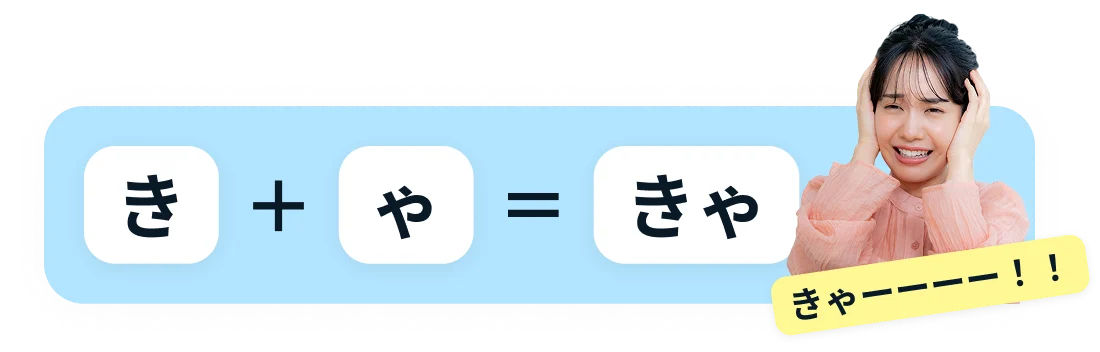
36 combination sounds formed using smaller や (ya), ゆ (yu), or よ (yo).
Examples: きゃ (kya), しゅ (shu)
きゃ (kya) sounds a bit like screaming: kyaaaaa!!
So while there are 46 core hiragana, you’ll encounter about 100 commonly used syllables in total.
Japanese Hiragana Chart
Below is a chart of hiragana showing all 46 basic hiragana characters. Practice writing them using proper stroke order to build a strong foundation.
How to Write Hiragana
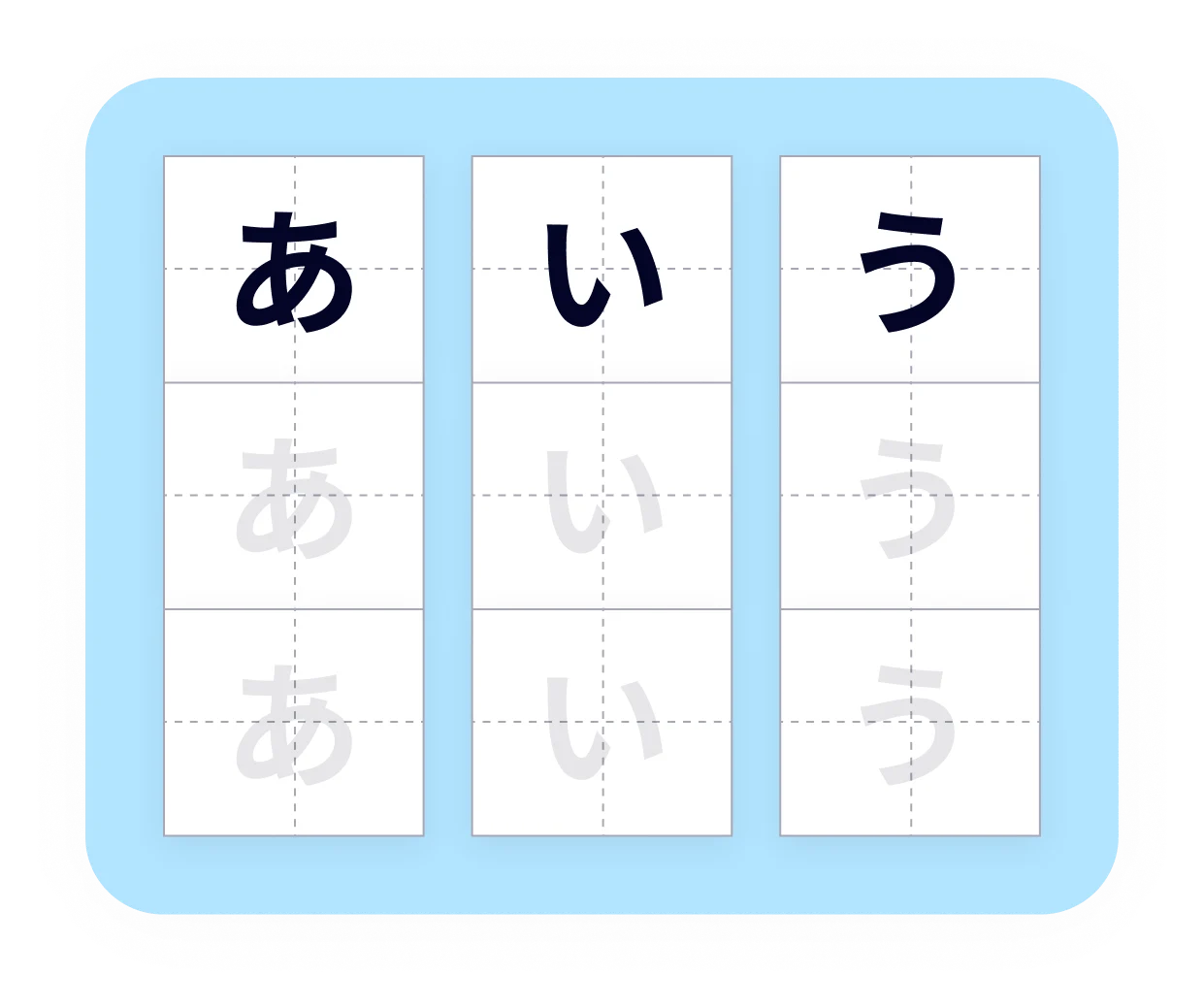
Learning how to write hiragana correctly impacts your future handwriting. Each character follows a specific stroke order to ensure readability and proper form.
- Use square grid paper to maintain proportions
- Follow stroke order - there's usually a good reason why they suggest that order
- Practice slowly at first, then build fluency
- Say each sound aloud as you write to reinforce memory
You'll find lots of free hiragna practice sheets online, like this one from Happy Lilac.
In Japan, as a kid you're forced to write these over and over again. And as an adult they judge your penmanship based on whether you can hit those proportions... no pressue, of course :)
Hiragana vs Katakana — What’s the Difference?
Hiragana(ひらがな)and Katakana(カタカナ)are both Japanese kana syllabaries. They represent the same sounds, but are used in different contexts. If you’re learning Japanese, start with Hiragana, then learn Katakana.
Hiragana(ひらがな)
- Native Japanese words(ことば), grammar, particles(は・を・に)
- Verb / adjective endings(~ます・~かった)
- Furigana readings above Kanji
- Softer, curved shapes(あ・ね・め など)
Example: これは ねこ です。
Katakana(カタカナ)
- Loanwords / foreign names(コンビニ・ホテル・アメリカ)
- Onomatopoeia(ドキドキ・キラキラ)
- Emphasis, brand names, technical terms
- Sharper, angular shapes(カ・タ・メ など)
Example: ここ は カフェ です。
How to Learn Hiragana
Not sure how to learn hiragana efficiently? We suggest strategies like these:
- Start small: Learn 5–10 characters a day, e.g. あいうえお first day, then かきくけこ the next day, etc.
- Use mnemonics: Associate visuals or stories with each character if it helps.
- Use words: Practice writing words like ねこ (cat), たべる (to eat). Using words in everyday life will make it more fun and relevant.
You can collect words from the Japan Blog or Graded Readers and test yourself in the Collections section.
Hiragana Keyboard: How to Type in Japanese
The easiest way to type Hiragana is to enable a Japanese IME (Input Method Editor).
You type in romaji (English letters) and the IME converts it to ひらがな.
Example: type konnichiha → こんにちは (remember: the particle は is typed ha but read “wa”).
macOS (Japanese – Romaji)
- System Settings → Keyboard → Text Input → Edit → +.
- Add Japanese → choose Romaji input.
- Switch inputs with Ctrl + Space (or the input menu on the menu bar).
Click the input icon (usually あ / A) in the menu bar to choose Hiragana, Katakana, or Alphanumeric.
Windows (Microsoft IME)
- Settings → Time & Language → Language & Region.
- Add a language → Japanese → install Microsoft IME.
- Press Win + Space (or Alt + Shift) to switch keyboards.
In the taskbar, click the IME icon (A/あ) to toggle Hiragana / Katakana / Alphanumeric.
iOS
- Settings → General → Keyboard → Keyboards → Add New Keyboard…
- Select Japanese – Romaji (or Kana flick keyboard).
- Use the 🌐 globe icon to switch keyboards.
Android
- Install Gboard (or your IME of choice).
- Gboard settings → Languages → Add Keyboard → Japanese (Romaji or Kana).
- Tap and hold the spacebar to switch keyboards.
Essential Typing Rules
- ん = type
nn(kana→ かな,kanna→ かんな) - Small っ (sokuon) = double the next consonant:
gakkou→ がっこう - しゃ / しゅ / しょ =
sha/shu/sho(also ok:sya/syu/syo) - ちゃ / ちゅ / ちょ =
cha/chu/cho(tya/tyu/tyoalso work) - Long vowels: おう for “ō”, えい for “ē” (often sounds like /ee/):
toukyou→ とうきょう - Particles: は is typed
ha(reads “wa”), へ ishe(reads “e”), を iswo(reads “o”) - Small vowels: ぁ/ぃ/ぅ/ぇ/ぉ =
xa/xi/xu/xe/xo(orla/li/lu/le/lo)
Converting Text & Choosing Kanji
Type in hiragana first, then use the IME’s conversion to choose kanji. Start typing, then press the conversion key (spacebar) to cycle through candidates (e.g., こうこう → 高校 / 口腔 / 恒光 …). Confirm with Enter.
Need Katakana? Type in hiragana, then convert to Katakana via the IME menu (or use the dedicated Katakana mode). Many IMEs also convert Latin terms automatically to Katakana loanwords.
Quick Troubleshooting
- You’re getting ABC instead of あいう? Switch the IME to Hiragana (icon should show あ).
- ん keeps turning into な? Type nn before vowels or
y(e.g.,kanyavskannya). - Missing the double consonant? Remember the small っ by doubling the next consonant (
kitte→ きって). You can also typeltsufor the small っ. - Wrong long vowels? For “ō” use ou (or おう), for “ē” use ei (or えい).
Why Should You Learn Hiragana?
If you're learning Japanese, Hiragana is the first place to start. It's like learning the ABC's for English. Mastering hiragana helps you understand grammar, read menus and signs, improve pronunciation, and use furigana to learn Kanji.
Frequently Asked Questions
Continue Learning Japanese
After Hiragana, you’re ready to move on to:
Learn Katakana(カタカナ)
Used for foreign words, brand names, and emphasis. You’ll see it on menus, signs, and product labels.
Go to Katakana Guide →Understand Japanese Grammar(文法)
Start building sentences! Begin with polite forms and core particles, then expand into more complex grammar.
Go to Grammar Guide →Get More Out of Bento Japanese
Create a free account to get weekly reads, save vocabulary to your Collections, and track your progress.